
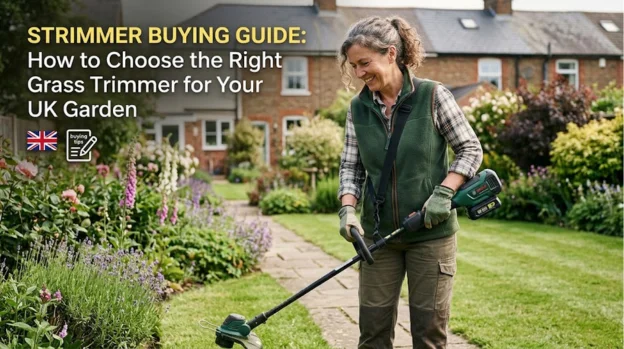
A strimmer is a grass-cutting tool designed for lawn edges, awkward corners, long grass, and places a mower cannot easily reach. For most UK gardens, the main decision is whether to buy a corded, cordless, or petrol-powered model. Your garden size, the type of vegetation, your budget, and access to power should guide that choice.
| Key point | What to know |
|---|---|
| Main use | Lawn edges, long grass, weeds, and tight spaces |
| Common power types | Corded electric, cordless battery, and petrol |
| Best choice for most homes | Cordless battery model |
| Cutting system | Usually nylon line; some models use plastic blades |
| Small gardens | Corded or lightweight cordless models |
| Larger gardens | Higher-powered cordless or petrol models |
| Tough growth | Heavy-duty trimmer or brushcutter |
| Useful features | Adjustable shaft, edging head, line feed, and plant guard |
Quick verdict: For most UK homes, a cordless grass trimmer is the easiest all-round choice. It gives you freedom from a mains cable without the maintenance required by petrol models. Choose a lightweight 18V model for routine lawn edging and weeds, or a more powerful 36V or brushcutter-style machine for large plots, long grass, or tougher growth.
What Is a Strimmer and What Does It Do?
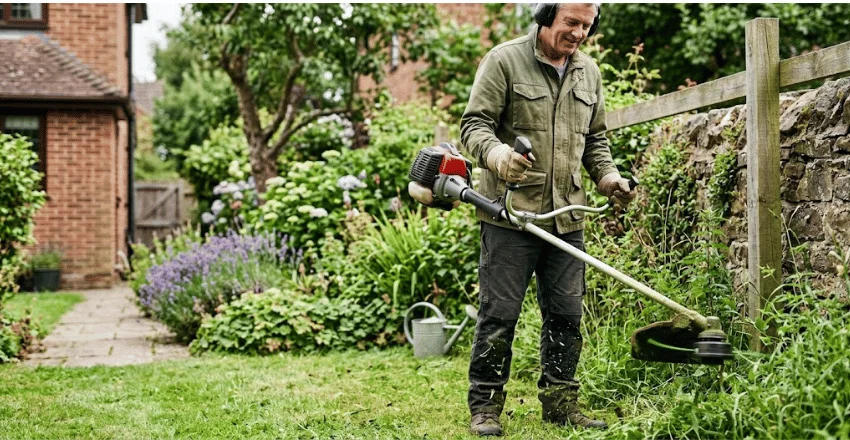
In everyday UK usage, the term usually refers to the same kind of tool as a grass trimmer or line trimmer. It cuts vegetation using a rapidly rotating nylon line or, on some models, another cutting attachment.
The tool is useful in places where a lawn mower struggles. Typical jobs include trimming around fences, trees, raised beds, paths, garden furniture, walls, and uneven ground.
The terminology is not completely consistent across retailers. Which? treats the term as another name for a grass trimmer, while some sellers use it to refer to more powerful machines. A brushcutter is a clearer separate category because it is designed for denser vegetation and tougher cutting work.
Corded vs Cordless vs Petrol Grass Trimmers
The best power source depends more on your garden than on the brand you choose.
| Type | Best for | Main advantages | Main drawbacks | Verdict |
| Corded electric | Small gardens near a socket | Low purchase cost, lightweight, and continuous power | Cable limits movement | Best budget choice |
| Cordless battery | Small to large domestic gardens | Easy movement, simple starting, and low maintenance | Battery adds cost and limits runtime | Best choice for most homes |
| Petrol | Large plots and demanding work | Strong power and quick refuelling | Heavier, noisier, and requires more maintenance | Best for frequent heavy-duty work |
Corded Electric: Pros and Cons
A corded model makes sense if your lawn is small and an outdoor power source is nearby.
Pros
- Usually cheaper to buy.
- No battery charging required.
- Continuous running time.
- Often lightweight and easy to store.
Cons
- Extension leads may be needed.
- The cable can restrict movement.
- Less convenient around obstacles.
- Not ideal for large or divided gardens.
This type is well suited to routine edging and light grass growth.
Cordless Battery: Pros and Cons
Battery-powered models remove the main inconvenience of corded tools: the mains cable. Modern domestic machines can handle a wide range of light- and medium-duty jobs.
Pros
- Freedom to move around the garden.
- Simple starting.
- Less maintenance than petrol equipment.
- Batteries may work with other tools from the same product range.
Cons
- Runtime depends on battery capacity.
- Batteries and chargers can increase the purchase price.
- Higher-powered models tend to weigh more.
- Replacement batteries can be expensive.
For a typical household garden, our recommendation is a cordless model because it offers the best balance of mobility, ease of use, and cutting power.
Petrol and Heavy-Duty Models: Pros and Cons
Petrol machines make more sense when long grass, thick weeds, or a large area would overwhelm a lighter domestic tool.
Pros
- Strong cutting performance.
- Suitable for longer work sessions.
- Quick refuelling.
- Better suited to rough areas.
Cons
- Greater weight and vibration.
- Fuel and maintenance costs.
- Louder operation.
- More effort required for starting, storage, and servicing.
Do not buy more power than your garden needs. A heavy machine can become tiring if your main task is simply edging a small lawn.
The 30-Second Choice Rule
Instead of comparing dozens of models first, start with the work you actually need to do.
| Your garden | Sensible starting point |
| Small lawn with neat borders | Lightweight corded or 18V cordless model |
| Medium garden with paths and beds | 18V or higher-powered cordless model |
| Large garden with long grass | Higher-powered cordless model |
| Dense weeds and rough growth | Heavy-duty model or brushcutter |
| Large rural plot requiring frequent clearance | Petrol or professional battery equipment |
This method helps prevent two common buying mistakes: paying for power you will not use or choosing a lightweight tool that struggles with regular garden work.
Features Worth Checking Before You Buy
Cutting Width
A wider cutting path covers ground faster. Narrower heads can be easier to control around plants, furniture, and tight corners.
For regular edging, precision can matter more than cutting width. For larger open areas, a wider cutting path can save time.
Weight and Balance
Check the tool’s total working weight, especially for battery-powered models. A machine that feels manageable for one minute can become uncomfortable during a longer session.
An adjustable front handle and telescopic shaft can help you maintain a more natural working position.
Line Feed
Grass trimmers need fresh cutting line as the exposed section wears down.
Common systems include:
- Automatic feed: releases line without manual adjustment.
- Bump feed: releases more line when the head is tapped as instructed.
- Manual feed: requires you to stop and adjust the line yourself.
Ease of line replacement is worth checking before purchase. A complicated spool system can make a simple garden job unnecessarily frustrating.
Battery Compatibility
If you already own cordless garden or DIY tools, check whether their batteries are compatible with the grass trimmer you are considering.
Buying within an existing battery system can reduce the cost of additional batteries and chargers. Always check the exact voltage and manufacturer compatibility before ordering.
Edging Function
Some trimmer heads rotate so the cutting line runs vertically along a path or lawn border. An edging wheel can also help you maintain a straighter line.
This feature is useful if clean lawn boundaries matter as much as clearing weeds.
How Much Should You Spend?
Current UK examples show a wide price range.
Expert Reviews lists budget corded options at about £55, while a more powerful 36V cordless example costs around £143 tool-only or £204 with a battery and charger. Its petrol example costs around £228. Which? Note that some heavy-duty machines can cost more than £300, including the battery and charger. Prices can change, so always check the current package before buying.
A simple budgeting rule works well:
- Small, tidy garden: prioritise comfort and easy line feeding rather than maximum power.
- Medium garden: allow more in your budget for cordless freedom and a suitable battery.
- Large or overgrown plot: prioritise power, cutting width, balance, and longer working time.
Always check whether the price of a cordless model includes the battery and charger. A low tool-only price can become far less attractive once both are added.
Grass Trimmer vs Brushcutter: Which Do You Need?
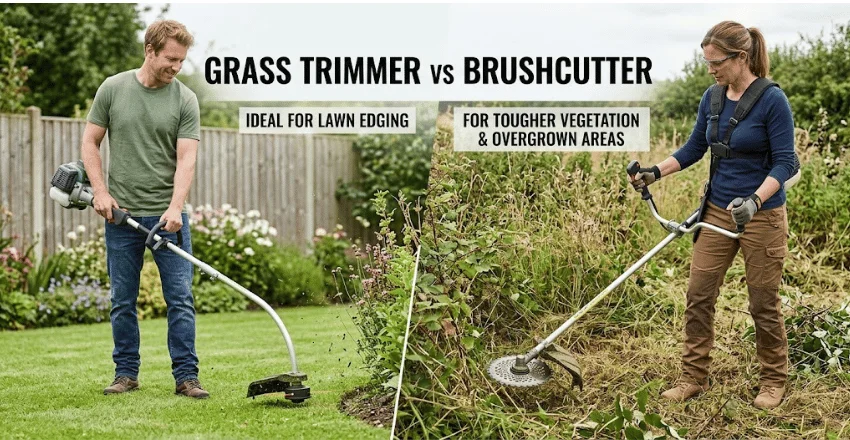
A standard grass trimmer is intended mainly for cutting grass, tidying lawn borders, removing light weeds, and reaching awkward areas.
A brushcutter is designed for tougher vegetation. It is usually heavier and may support stronger cutting attachments. B&Q describes brushcutters as better suited to overgrown grass, weeds, brambles, and similar demanding work.
Choose the lighter tool if you mainly maintain a lawn. Consider a brushcutter if clearing rough growth is a regular task.
Can You Use One on Wet Grass?
Dry conditions are preferable.
EGO says wet grass can create safety, equipment, and lawn-related problems, while Ryobi notes that damp cuttings may stick to the line, reducing cutting efficiency. Slippery ground can also make garden work less safe.
Wait for the lawn to dry whenever possible. Follow the manufacturer’s instructions for your machine, especially when electricity, batteries, or wet conditions are involved.
Basic Safety Before You Start
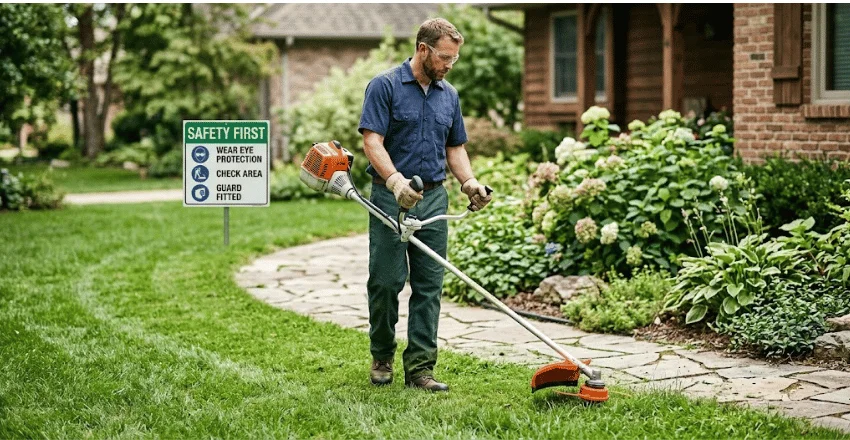
The fast-moving cutting line can throw stones, soil, and other debris.
Before working:
- Wear eye protection and suitable footwear.
- Check the area for stones, wire, toys, and other objects.
- Keep people and pets away from the working area.
- Use the fitted guard.
- Inspect the cutting head before starting.
- Follow the manufacturer’s instructions for replacement line or attachments.
Do not fit improvised cutting parts. Use only attachments approved for your specific machine.
Final Verdict
For most UK homeowners, a cordless grass trimmer is the best starting point. It suits routine edging, trimming grass around obstacles, and controlling light-to-medium weeds without the inconvenience of a trailing mains cable.
A corded model remains a sensible low-cost option for a compact garden. Petrol and heavy-duty equipment make more sense if you regularly tackle larger areas or rough vegetation.
Choose according to the work you face most often. Power matters, but comfort, balance, line feeding, and battery cost can have an even greater effect on everyday use.
Next Step
Match the tool to your garden before comparing brands. Measure the area, note the toughest vegetation you normally cut, and decide whether a mains cable would comfortably reach the areas you need to trim.
For more household and outdoor product content, browse Topicley’s Home Improvement section. You can also see how Topicley structures feature comparisons in its Ninja Outdoor Grill guide.
FAQs
Usually, yes. In UK consumer usage, the terms are commonly used interchangeably. Some retailers use different wording for heavier models, so check the machine’s cutting system and intended workload rather than relying only on the product name.
Cordless models are more convenient in gardens where a cable would restrict movement. Corded models can still be cheaper and provide continuous power, making them suitable for smaller spaces.
A lightweight domestic corded model or an 18V cordless machine is a sensible starting point for lawn edges and routine grass trimming. Tougher weeds may require more cutting power.
Yes, but capability varies by model. Work gradually through long growth rather than forcing a lightweight machine into dense vegetation. For thick weeds or brambles, consider heavier-duty equipment.
Nylon line works well for general trimming and edging. Alternative blade systems may suit different types of vegetation, but replacement costs and contact with hard surfaces can affect running costs. Follow the manufacturer’s approved attachment list.
Check whether the battery and charger are included, then compare runtime, weight, cutting width, the line-feed system, edging features, and battery compatibility with tools you already own.