

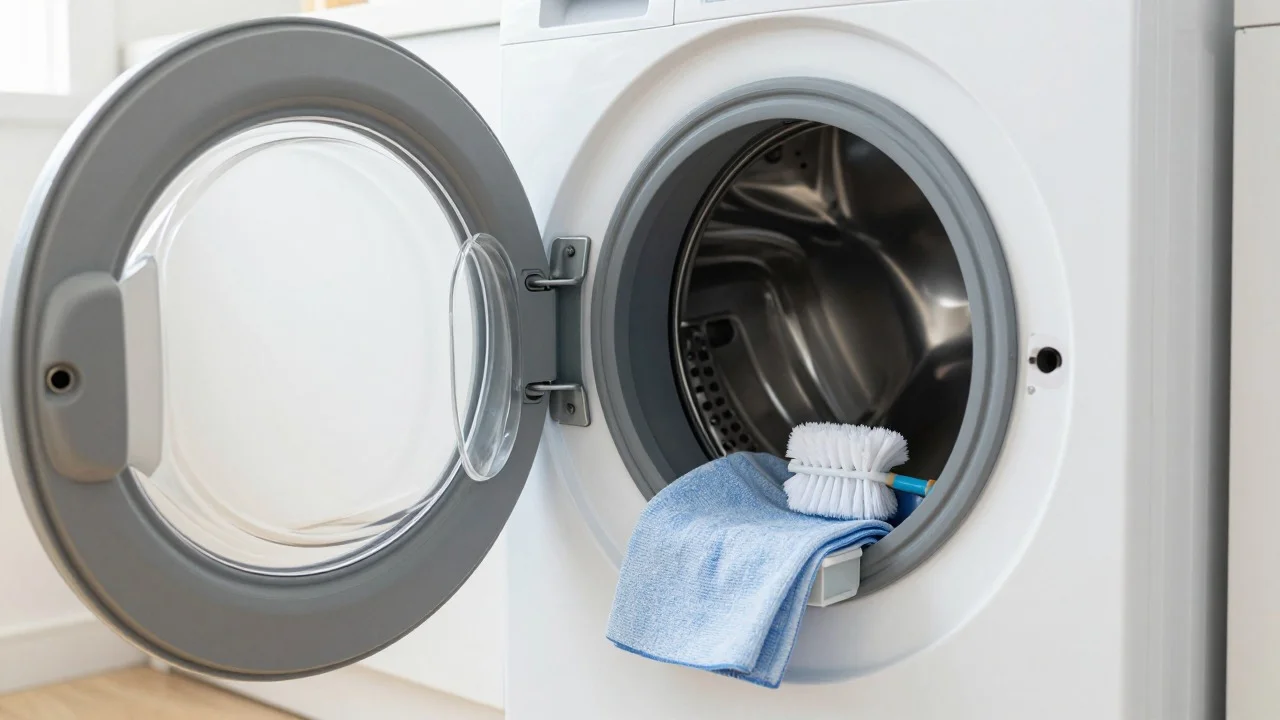
If you’re searching for how to clean washing machine parts without damaging the appliance, start with the areas that collect the most residue: the drawer, seal, filter, and drum. A regular clean can remove detergent buildup, trapped lint, and damp residue that cause stale smells.
Quick answer: Empty the washer, check the manual, clean the detergent drawer and rubber door seal, drain and rinse the pump filter, then run the model’s drum-clean or approved hot maintenance programme. Wipe the outside and leave the door and drawer open to dry. Never combine bleach with vinegar.
| Area | What to do | Useful routine |
|---|---|---|
| Door seal | Wipe inside the folds and dry them | Check monthly and dry any visible moisture |
| Detergent drawer | Remove residue, rinse, and dry | Clean during your regular deep clean |
| Pump filter | Drain safely, remove debris, and rinse | Clean around every three months or when blocked |
| Drum | Run the approved maintenance or drum-clean cycle | Clean every one to three months, depending on use |
| Exterior | Wipe with a soft, damp cloth | Clean as needed |
Beko recommends cleaning the seal monthly, checking the filter about every three months, and deep-cleaning the appliance every one to three months. Your own manual should take priority as programmes and cleaning products vary by model.
For more household maintenance ideas, browse Topicley’s Home Improvement guides.
What You’ll Need
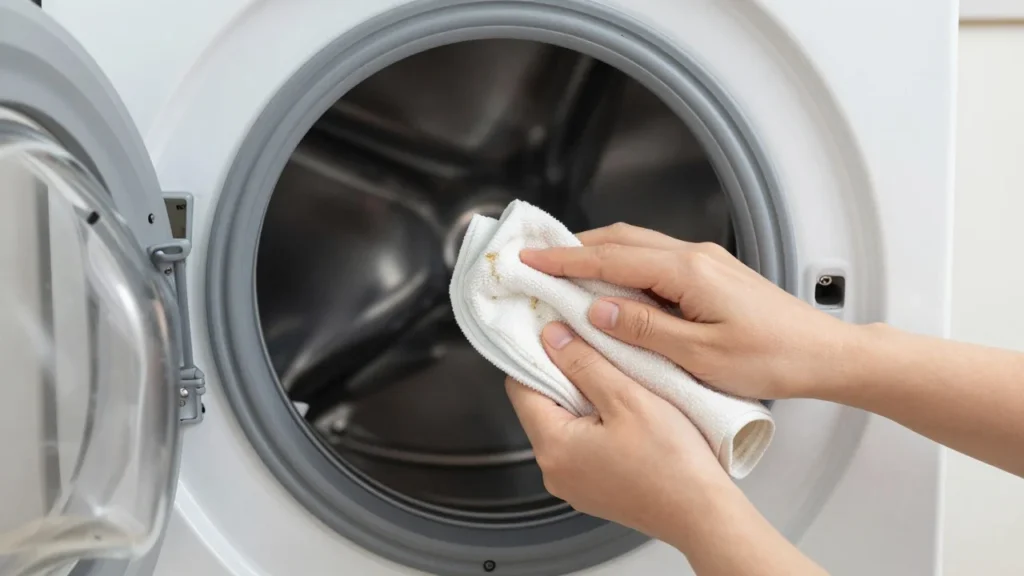
How to clean washing machine? You don’t need a cupboard full of specialist products. Start with simple cleaning tools and use only products approved for your model.
- Microfibre cloths.
- A soft cleaning brush or old toothbrush.
- A small bowl or shallow tray.
- An old towel.
- Warm water.
- Mild washing-up liquid.
- Manufacturer-approved washer cleaner, if required.
- Your appliance manual.
Keep chlorine bleach, vinegar, and other strong cleaners separate. Never mix cleaning chemicals unless the manufacturer specifically instructs you to do so.
How to Clean Washing Machine in 7 Safe Steps
1. Check the Manual and Empty the Washer
Remove all clothes and check the drum for coins, tissues, hair clips, or other loose objects.
Next, read the cleaning section of the manual. Look for a Drum Clean, Tub Clean, Maintenance Wash, or similar programme. The manual should also tell you which cleaning products are suitable.
Switch the appliance off before cleaning removable parts. Disconnect it from the power supply if the manufacturer instructs you to do so.
2. Remove and Wash the Detergent Drawer
Pull the detergent drawer out according to the manufacturer’s instructions. Some models have a small release tab that must be pressed first.
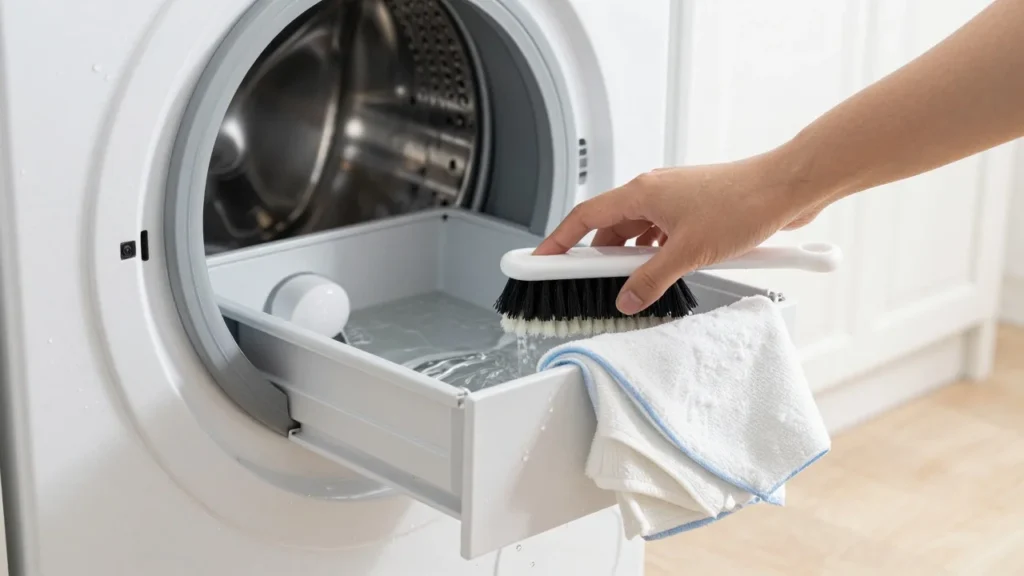
Rinse the drawer with warm water. Use a soft brush and a little mild washing-up liquid to remove stubborn detergent or fabric conditioner residue. Clean the recess with a damp cloth, then dry the drawer before refitting it.
A dirty drawer can retain moisture and leftover detergent, so don’t rely on the drum cycle to clean it.
3. Wipe the Door Glass and Rubber Seal
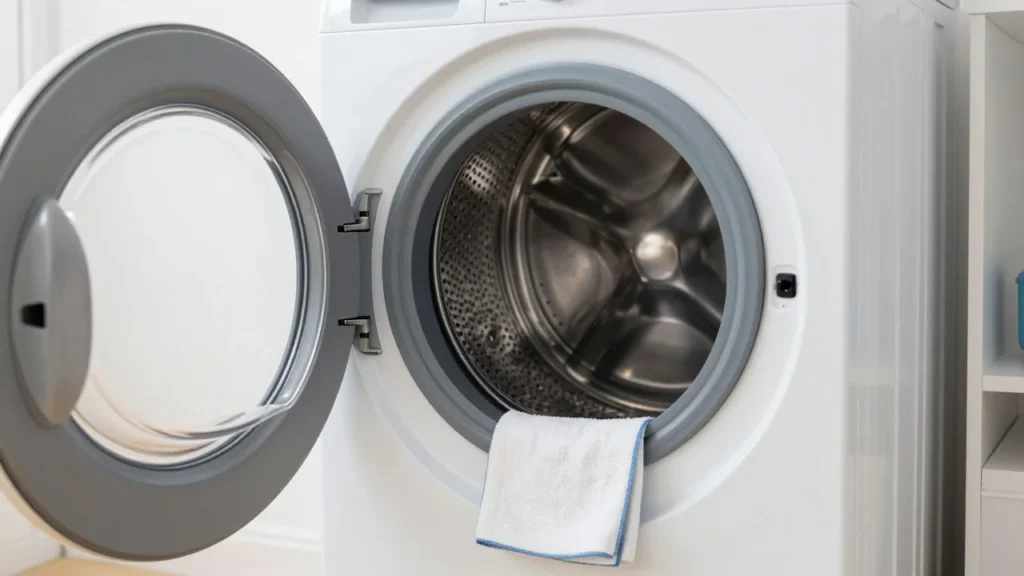
Use a damp cloth to clean the door glass. Then gently pull back the rubber seal and inspect the folds.
Remove lint, hair, detergent residue, and any small items trapped inside. Wipe the rubber with water or a cleaner permitted by your manual. Dry it before moving on.
Bosch advises removing fluff and detergent residue from the door and seal as part of routine care.
If you find persistent dark marks, don’t attack the rubber with an unapproved chemical. Check the manual, as strong products can affect certain seals.
4. Drain and Clean the Pump Filter
The washing machine filter is easy to forget, yet it can collect fibres, coins, buttons, and other debris.
Turn the appliance off and disconnect it from the power supply. Follow the manual’s instructions for shutting off the water if required. Place an old towel and a shallow tray beneath the filter access panel.
Drain any residual water slowly before removing the filter. Unscrew it, clear away debris, and rinse the removable filter. Check that the pump area is clear, then refit everything securely.
Bosch’s filter-cleaning procedure follows the same sequence: disconnect the appliance, prepare for residual water, drain it, clean the filter, and refit it correctly.
5. Run the Approved Drum-Clean Cycle
Once the removable areas are clean, deal with any residue inside the drum and in the internal water path.
Use your model’s self-clean programme if it has one. Otherwise, follow the manual’s recommended empty maintenance cycle and temperature. Add an approved washing machine cleaner only if the instructions call for it.
To clean the washing machine drum properly, don’t add laundry during this cycle. The aim is to let the maintenance programme work on the appliance itself.
If you’re planning broader changes to the laundry or kitchen area, TopiTopicley’s design for a wider kitchen upgrade can help with the bigger-picture budgeting.
6. Wipe the Controls and Exterior
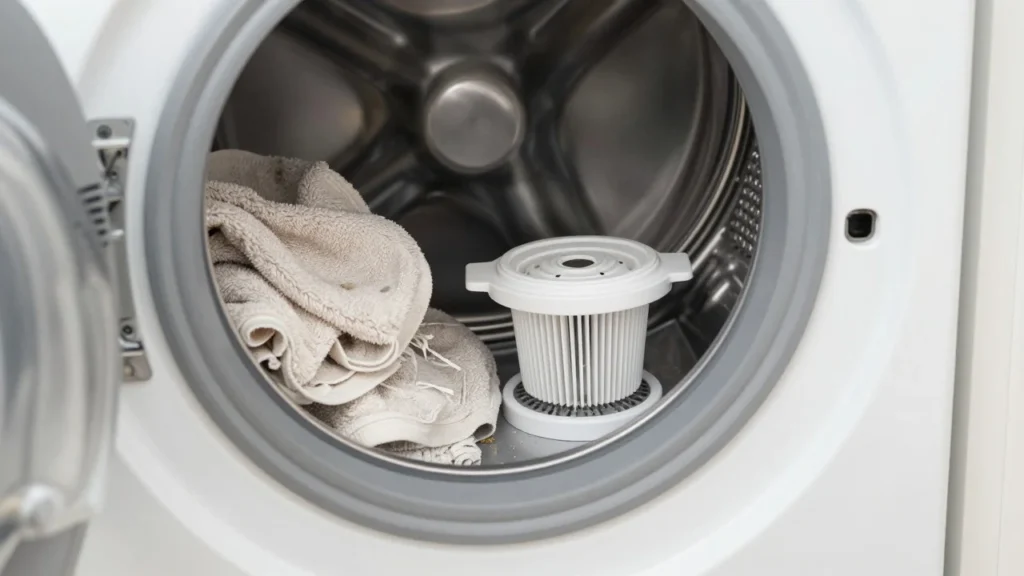
Use a soft, damp cloth on the door, top, sides, and accessible control-panel surfaces.
For ordinary grime, mild washing-up liquid diluted in water is usually enough for the exterior. Beko recommends using a soft cloth with mild dishwashing soap and water rather than abrasive cleaning methods.
Don’t spray lDon’tDon’t directly onto buttons, seams, or electrical controls. Apply it to the cloth instead.
7. Let the Interior Air-Dry
Dry the seal and leave the door slightly open once the cleaning cycle has finished.
Keep the detergent drawer ajar too, if its design allows. Air circulation helps moisture escape rather than remain trapped inside the appliance. LG UK includes leaving the door open after washing in its care recommendations.
For another example of why appliance-specific care matters, see door Grill guide.
Which Cleaning Product Would You Use for
Tsingle productone isn’right forrigthat’sthat’s every model. Manufacturer instructions are the safest starting point.
| Cleaner | Where it may help | Main caution |
| Approved machine cleaner | Drum and internal residue | Follow the label and manual |
| Mild washing-up liquid | Drawer and exterior | Keep water away from electrical controls |
| White vinegar | Permitted by some manufacturers | Check the manual before use |
| Bicarbonate of soda or soda crystals | Used in some cleaning routines | Don’t assume; only if the model permits them |
| Chlorine bleach | Only where the manufacturer recommends it | Never combine it with vinegar |
Online advice often treats vinegar as a universal remedy. Manufacturer guidance is less uniform. Some brands publish vinegar-based cleaning advice, while product-specific instructions may set different limits.
Hotpoint also warns against mixing bleach with vinegar in its cleaning guidance.
How Often Should You Deep-Clean It?
A practical starting point is to perform a ddeepean every o1to t3three monthsadjusted ftto yourousehold and the manufacturer’s instructions. Beko uses that range in its current UK guidance.
Check the seal more often because moisture and debris are easy to spot there. The pump filter may need attention sooner if drainage slows or the machine displays a filter warning.
Homes that run several loads a day may need more frequent maintenance than households that use their machines less often.
Why Does a Washer Still Smell After Cleaning?
A smelly washing machine may need more than one empty cycle.
Check the areas that the water cycle doesn’t fully clean, especially the drawer, rubber folds, and filter. A forgotten item in the filter can trap dirty water and debris.
Persistent odours after a full clean may also point to a drainage or plumbing problem. If the machine drains poorly, displays an error code, or smells strongly after several cleans, check the manual and arrange appropriate servicing.
How to Keep It Cleaner Between Deep Cleans
A few small habits can reduce the amount of work needed later.
- Remove damp laundry after the cycle finishes.
- Wipe visible water from the rubber seal.
- Keep the door slightly open when it is safe to do so.
- Let the detergent drawer dry between washes.
- Check pockets before loading clothes.
- Use detergent according to its label and your appliance’s instructions.
- Deal with a blocked filter rather than repeatedly running extra cycles.
These steps won’t replace periodic maintenance, but they can help prevent moisture and residue from building up between cleans.
Make the Next Clean Easier
The safest routine isn’t based on one miracle ingredient. Clean each part separately, run the maintenance programme your manufacturer designed, and give damp areas time to dry.
Set a recurring reminder to clean the seal, drawer, and filter. A few minutes of routine care can make the next deep clean much simpler.
Frequently Asked Questions
Only if the manufacturer allows it., cleaningadvice differs between brands and models, so check the manual before putting vinegar through internal components.
Some household cleaning guides recommend it, but your model’s instructions should come first. An approved maintenance product is the simpler choice when the manual specifies one.
Clean the drawer, rubber seal, and pump filter rather than immediately running another drum cycle. Check for trapped debris, standing water, and visible residue. If the smell rpersistsafter a full cleaning, investigate the drainage system and follow the troubleshooting section in the manual.
Beko recommends cleaning it roughly every three months or when the filter becomes clogged. Other manufacturers may recommend a different schedule, so follow the interval stated in your manual.
Start by wiping the folds and removing trapped residue using the cleaning method approved for the rubber seal. If staining persists, consult the manual before using bleach, vinegar, or another strong product.