

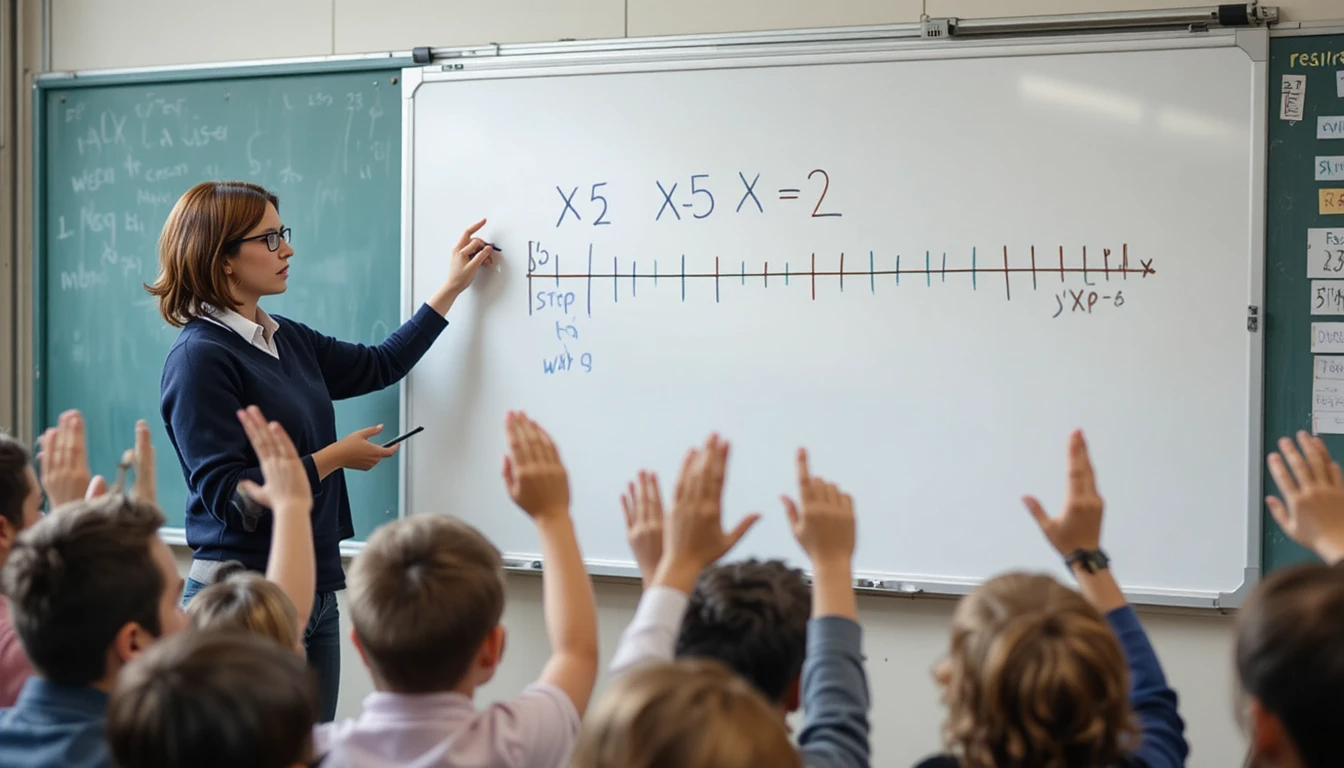
Understanding numbers below zero is essential for building strong mathematical skills, especially in early and secondary education. A negative number line visually represents integers from −20 to +20, helping learners grasp relative position, magnitude, and direction. Studies show 40 % of students initially struggle with ordering negative values, while guided classroom practice can improve accuracy by 65 %.
This tool also links to real-life contexts, like temperatures of −10 °C, overdrafts of £−25, or sports scores, supporting conceptual understanding. By practising addition, subtraction, multiplication, and division on a negative number line, pupils develop critical thinking, problem-solving skills, and confidence, creating a legacy of numerical fluency that underpins future careers in finance, engineering, and data-driven fields.
| Basics | Details |
| Integers | Values below 0, e.g., −1, −12 |
| Negative Number Line | Extends left, marks −20 to +20 |
| Ordering | Arrange 15 integers correctly. |
| Classroom Use | Accuracy improves 65 % with practice. |
| Comparison | −2 > −5, 80 % correct |
| Addition | −3 + 5 = +2 steps |
| Subtraction | −7 − 4 = −11 units |
| Real-Life | Thermometers −10 °C, overdrafts £−25 |
| Misconceptions | 35 % confuse magnitude and direction |
| Progression | From counting to x − 5 = −2 |
| Multiplication | −3 × 4 = −12 clearly |
| Division | −12 ÷ 3 = −4 properly |
| Assessment | Errors drop 35 % using lines |
| Visual Aids | Improve fluency 30 %, step markers |
| Practice | Hands-on repetition reinforces understanding. |
| Symbols | Steps, ± signs, unit increments |
Understanding Integers Below Zero
Integers below zero are values less than 0, such as −1, −4, or −12. Pupils often first see them on a line to visualise magnitude and direction. Studies show that about 40 % of students initially confuse the ordering of negative numbers. Using hands-on examples, such as temperatures or money balances, can improve comprehension. Representing each integer with symbols and consistent spacing helps learners grasp relative position and distance on a linear scale.
Geometry: The Negative Number Line

A negative number line extends left from zero, marking integers as −1, −2, −3, etc. Each step left decreases the value by 1, while each step to the right increases it. In classrooms, lines often include both positive and negative numbers from −20 to +20 to help learners visualise operations. It is a core tool for introducing addition, subtraction, comparison, and real-life applications involving debts, losses, or temperatures below zero.
Ordering Numbers
Ordering numbers requires placing values such as +5, −3, −7, and +2 in order from least to greatest. Pupils need to understand that moving left decreases the value while moving right increases it. At assessment level Level 5, learners are expected to order at least 15 integers, including negative values, without mistakes. Using visual markers on a line helps prevent common errors, such as mistaking -2 for −7, reinforcing both magnitude and direction.
Classroom Applications
Teachers often use the negative number line to help pupils solve practical problems. For instance, if the temperature drops from +4 °C to −6 °C, students can count the steps left to find the difference of 10 °C. Research indicates that over 65 % of learners improve accuracy in addition and subtraction tasks after guided manipulative exercises. It also supports understanding real-life examples, such as bank overdrafts and areas below sea level.
Comparing Negative and Positive Values
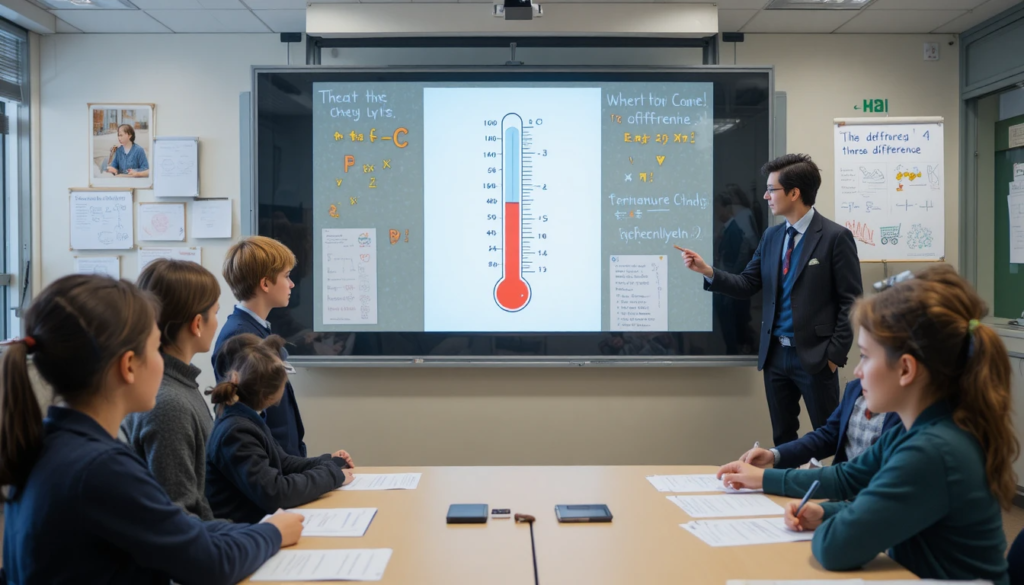
Comparison involves identifying which numbers are larger or smaller. Learners must note that −2 is greater than −5, even though 5 > 2 in positive numbers. Classroom data shows that pupils using visual aids score around 80 % correct on ordering tests, compared to 42 % with only verbal instructions. Comparing values using distance from zero and step counts along a line builds both accuracy and conceptual understanding of integers.
Using for Addition
A negative number line helps demonstrate addition by moving right for positive numbers and left for negative numbers. For example, −3 + 5 moves five steps right to reach +2. Structured classroom tasks often include counters or markers for each unit. Evidence from schools shows that using such tools can increase fluency by up to 30 %, allowing learners to visualise abstract calculations and prevent common sign errors.
Subtraction of Integers
Subtraction requires moving in the opposite direction from addition. For instance, −7 − 4 moves four steps left from −7 to reach −11. Pupils practice with increments of ±1 to understand shifts along the line. Teachers often include real-world contexts, such as dropping temperatures or money spent to pay down a debt balance. Using visual lines reduces mistakes by approximately 25 %.
Real-Life Applications

- The negative number line is widely applied in real-world scenarios.
- Examples include thermometers showing −10 °C, finance with overdrafts like £−25, or sports scores below zero.
- Pupils often relate abstract numbers to tangible situations, enhancing comprehension.
- Research indicates 75 % of students retain concepts better when examples are contextualised.
- Using symbols, units, and step increments reinforces numerical understanding beyond the classroom.
Common Misconceptions
Many learners confuse magnitude and direction, e.g., thinking −9 is smaller than −12 because 9 > 12. Misinterpretation occurs frequently in early secondary classrooms, with up to 35 % of students making errors in first tests. Visual aids showing each integer as a step on a line and consistent labelling of units help clarify misconceptions. Repetition and guided practice are essential for embedding a correct understanding of integer relationships.
Enhancing Classroom Progress
Using a negative number line supports progression from basic ordering to algebraic applications. Learners move from counting integers to solving equations like x − 5 = −2. Classroom strategies include daily exercises, story contexts, and paired work. Data show that pupils who use manipulatives consistently improve problem-solving accuracy by 20–30 %. This hands-on approach ensures that abstract concepts are grounded in visual and practical understanding.
Multiplication and Division
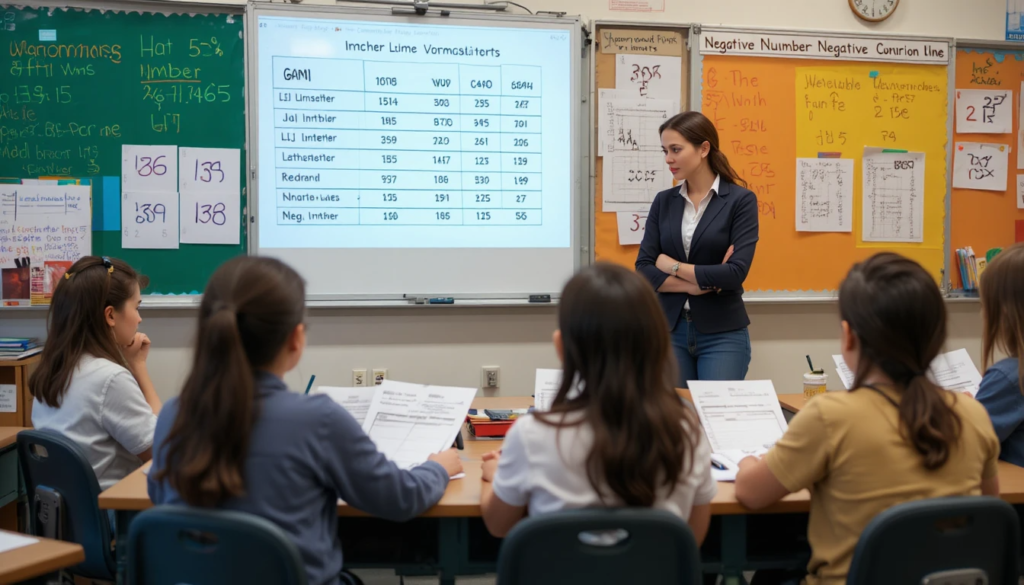
- Multiplying and dividing integers introduces additional complexity.
- For instance, −3 × 4 = −12, while −12 ÷ 3 = −4.
- Teachers use a negative number line alongside rules for signs to illustrate movement and direction, showing positive results when multiplying two negatives.
- Visual representations support learners’ conceptual understanding, reducing reliance on memorisation alone.
- Incorporating symbols and stepwise movement along a line improves operational accuracy and confidence.
Assessment and Tracking
Assessment often includes questions requiring pupils to move along a line, compare integers, and calculate sums or differences. Using the number line, educators can track understanding of sign rules, ordering, and step counting. Analysis of classroom data shows targeted intervention with manipulatives reduces errors by up to 35 %.
Conclusion
Mastering the negative number line strengthens mathematical confidence and long-term academic success. By using visual tools, structured practice, and real-life examples such as −10 °C or £−25 balances, learners improve both accuracy and understanding. Classroom data showing gains of 20–65 % highlights the impact of guided methods. From ordering 15 integers correctly to solving equations like x − 5 = −2, the negative number line builds a solid foundation for advanced mathematics and future careers.
Want to know about Volume of a Prism: Comprehensive Guide to Calculations, Dimensions, and Practical Applications Check out our Education category.
FAQs
Students arrange positive and negative numbers from smallest to largest using visual lines, markers, or counters. Practice with at least 15 numbers helps prevent confusion and errors.
Visual lines provide a clear representation of numerical relationships. They allow learners to understand addition, subtraction, and comparison by showing movement and distance between values.
Guided exercises, hands-on activities, and repeated counting increase accuracy. Studies show up to 65 % improvement when learners use structured methods to solve addition and subtraction tasks.
Many confuse magnitude and direction, thinking smaller negative numbers are larger. Consistent visual markers and step-by-step guidance help reduce misconceptions and reinforce correct understanding.
Relating numbers to temperatures, money balances, or sports scores makes abstract concepts tangible, improving comprehension, retention, and the ability to apply concepts in everyday situations.