

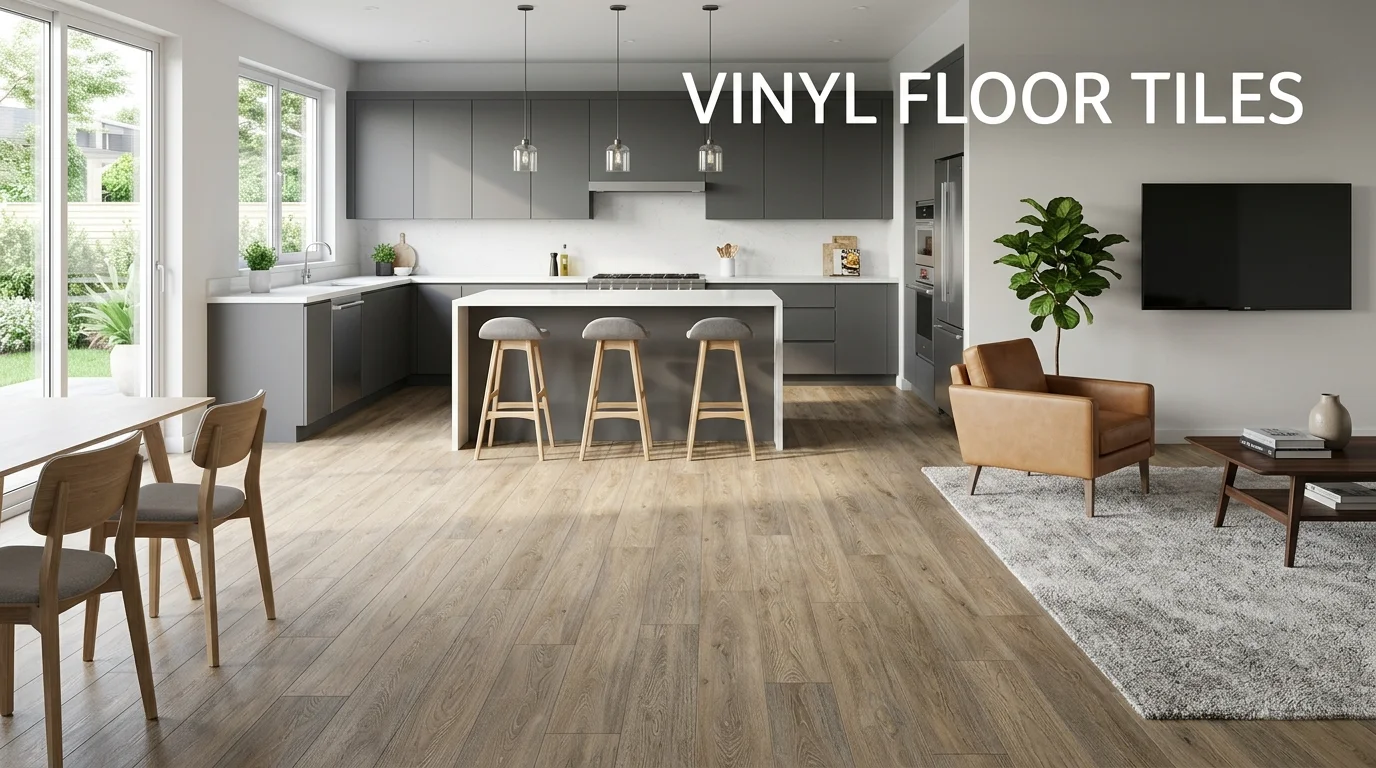
Vinyl floor tiles give UK homeowners a practical way to update kitchens, bathrooms, hallways, and living spaces. They combine a wide range of designs with straightforward cleaning and several fitting methods. Your result depends heavily on product quality, room conditions, and subfloor preparation.
Vinyl flooring tiles are modular PVC-based floor coverings sold as self-adhesive, glue-down, loose-lay, or click-fit products. UK buyers should compare wear layer, water-resistance rating, fitting method, subfloor condition, and total installed cost. Good preparation matters because bumps, grout lines, or moisture can affect the finished floor.
| What to check | Practical UK guidance |
|---|---|
| Main formats | Self-adhesive, glue-down LVT, click LVT, and loose-lay products |
| Supply cost | Tiles or planks commonly cost about £15–£20 per m²; LVT averages £25–£40 per m². |
| Installed cost | Tiles or planks average roughly £25–£50 per m²; LVT averages £35–£65 per m². |
| Suitable rooms | Kitchens, bathrooms, hallways, bedrooms, and living spaces, subject to the product rating |
| Key preparation | The base should be clean, dry, stable, smooth, and level |
| DIY difficulty | Self-adhesive and many click systems are easier than glue-down fitting |
| Main buying check | Compare total project cost rather than the pack price alone |
Key Takeaways
- Choose the fitting system around the room, subfloor, and your DIY experience.
- Price subfloor repairs, adhesive, trims, removal, and labour before ordering.
- Check the manufacturer’s moisture rating before using any product in a bathroom.
- Smooth preparation reduces the chance of joints, ridges, and grout lines showing later.
- Use samples at home because lighting can change how stone and timber effects appear.
- Older flooring may need an asbestos assessment before sanding, cutting, or removal.
Which Type of Vinyl Tile Should You Choose?
The main choice is between self-adhesive, glue-down, and click-fit flooring. Each system has different preparation needs, fitting demands, and long-term advantages. Your room and existing base should guide the decision, not appearance alone.
| Type | Good fit for | Main advantage | Main consideration |
|---|---|---|---|
| Self-adhesive | Utility rooms, simple DIY projects, quick refreshes | Easy application | Needs a smooth and clean base |
| Glue-down LVT | Kitchens, hallways, permanent installations | Stable finished surface | Preparation and adhesive work require care |
| Click LVT | Bedrooms, living rooms, many renovation projects | Straightforward floating installation | Floor height and joint support need checking |
| Loose-lay | Selected residential or commercial areas | Easier removal or replacement | Product-specific fitting rules vary |
Self-adhesive flooring can suit a smaller project where speed and budget matter. Its adhesive backing removes a separate gluing stage, but surface preparation still matters. Dust, grease, moisture, or uneven patches can weaken the bond.
Glue-down LVT creates a strong bond and works well where stability matters. The subfloor usually needs careful smoothing before applying adhesive. Poor preparation can remain visible through thinner products after installation.
Click systems join together above the subfloor instead of bonding across the whole surface. This can make installation more accessible for experienced DIYers. Always follow the manufacturer’s instructions for expansion, underlay, and subfloor for the chosen range.
How Much Do Vinyl Floor Tiles Cost in the UK?
Current 2026 UK cost data puts standard tiles and planks near £15–£20 per square metre for materials. LVT commonly sits around £25–£40 per square metre before fitting. Installed prices can rise to roughly £25–£50 and £35–£65 respectively.
Treat these figures as budgeting ranges rather than quotations. Room size, pattern, local labour, and preparation can change the total substantially. Removing old flooring or levelling an uneven base can add further expense.
Professional labour for vinyl fitting is commonly quoted around £150–£250 per day in current UK cost guidance. Larger or more complicated rooms may take longer. London and South East labour can also cost more than some other regions.
If flooring forms part of a larger kitchen project, compare it with Topicley’s new kitchen cost guide. That helps you compare flooring costs with cabinets, appliances, plumbing, and other renovation spending. It can also prevent one finish from consuming too much of the overall budget.
Where Does This Flooring Work Well?
Kitchens are a natural choice because the surface is easy to clean and comes in many designs. Choose a product rated for the moisture and traffic expected in that room. Consider how the colour works beside cabinets, worktops, and wall finishes.
Bathrooms need more careful product selection because water exposure is greater. Many modern products are water-resistant, while suitable LVT ranges can handle moisture-prone spaces. Check the individual specification rather than assuming every tile has the same protection.
Hallways need a finish that can handle frequent shoes, dirt, and repeated cleaning. Bedrooms and living areas usually require less moisture protection. In those spaces, comfort, appearance, sound, and installation method may matter more.
Planning several room finishes together can produce a more consistent result. Topicley’s wall panelling guide covers another popular way to change interior surfaces. Topicley’s Home Improvement section also collects related renovation and maintenance guides.
Why Subfloor Preparation Matters
A new surface will only look as even as the base beneath it allows. Remove loose debris, grease, damaged material, and obvious high spots before fitting. Repair unstable areas and follow the flooring manufacturer’s preparation instructions.
Existing ceramic tiles can sometimes remain beneath new vinyl, but they must be sound and level. Deep grout lines may need smoothing compound because their pattern can eventually show through. Flooring retailer Tapi recommends a clean, dry, stable, and level surface before installation.
Floorboards often need extra preparation because gaps and movement can affect a thin covering. You may need a suitable board or preparation system to create a smooth base. Do not assume a flexible floor covering will permanently hide defects underneath it.
Measure floor height before choosing a floating system or overlay method. Extra layers can affect doors, thresholds, kitchen plinths, and transitions into adjoining rooms. Checking these details before ordering reduces awkward alterations during fitting.
Can You Use It With Underfloor Heating?
Some products can be installed with underfloor heating when their manufacturer permits it. Temperature limits and installation methods vary between ranges. Check both the heating system and flooring instructions before fitting.
Tapi advises keeping the floor surface below 27°C for its compatible flooring systems. Extra layers above existing tiles can also change how heat reaches the room. Your chosen brand may specify different preparation or operating requirements.
Do not rely on a generic recommendation when you already have heated flooring. Confirm the maximum floor temperature and approved adhesive or underlay first. That protects the flooring and helps the heating system work as intended.
Fitting Tips That Prevent Common Problems
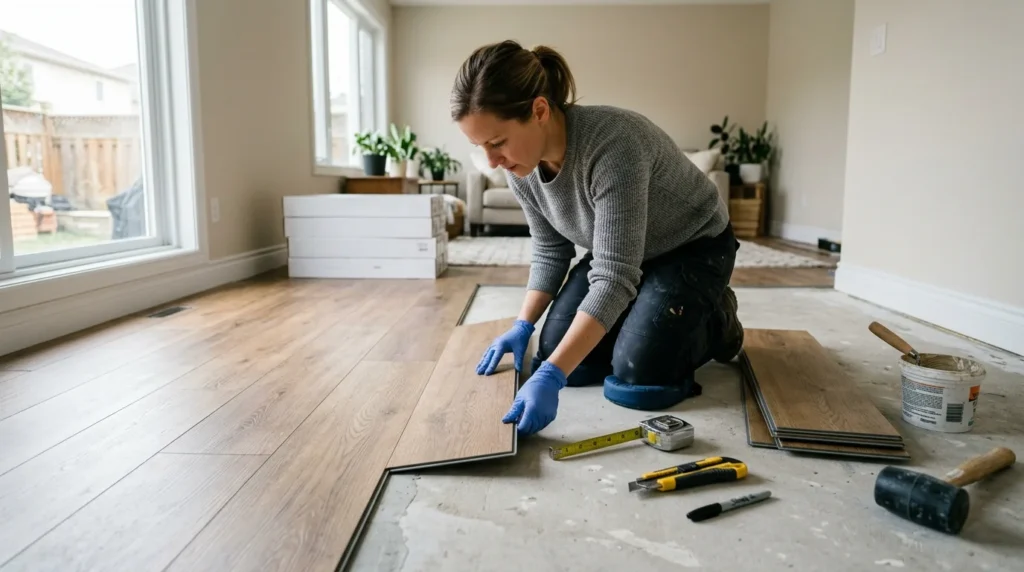
Measure the room carefully, including recesses, doorways, and awkward corners. Many fitting guides suggest allowing extra material for cuts and waste. Patterned layouts can require more spare material than a simple straight installation.
Plan the layout before removing backing paper or spreading adhesive. Dry positioning helps prevent narrow strips appearing along a visible wall. It also shows whether doorways and room centres create awkward tile positions.
Allow the flooring to acclimatise when the manufacturer requires it. Keep the room within the recommended temperature range during fitting. Rushing this stage can make installation harder and may conflict with warranty conditions.
For substantial renovation work, professional fitting can be worth considering. Complex levelling, glue-down systems, and irregular rooms demand more preparation skill. Topicley’s home extension guide also explains why wider building projects benefit from coordinated planning.
Cleaning and Maintaining Your New Floor
Routine care is usually simple if you remove dirt before it scratches the wear surface. Sweep or vacuum loose grit and wipe spills promptly. Use cleaning products approved by the flooring manufacturer.
Avoid soaking joints unless the product is specifically designed for that exposure. Excess water can reach edges, adhesive, or the subfloor on unsuitable installations. Avoid steam cleaning unless your flooring brand explicitly permits it.
Use protective pads beneath furniture legs to reduce marks and scratches. Lift heavy furniture rather than dragging it across the surface. Entrance mats can also reduce the amount of grit brought into busy hallways.
One benefit of a modular floor is that you can replace individual damaged sections. Replacement difficulty depends on whether the floor is glued, clicked, or self-adhered. Keeping a few spare matching pieces can make later repairs easier.
A Safety Check Before Removing Old Flooring
Older UK homes can contain flooring materials that need special care during renovation. HSE states that asbestos was used in some PVC and thermoplastic floor tiles, mastics, and floor coverings. Such materials can be difficult to identify by appearance alone.
Do not sand, grind, drill, or aggressively remove suspicious old flooring without professional advice. HSE recommends professional guidance when you think asbestos may be present. Buildings constructed or refurbished before 2000 deserve particular attention during intrusive work.
This issue concerns older materials, not modern flooring products. The practical point is to assess what you are removing before concentrating on the replacement. Safe preparation should always come before cosmetic improvement.
What to Check Before You Buy
Start by measuring the room and identifying the existing subfloor. Then decide whether you want a floating, bonded, or self-adhesive installation. This quickly narrows the suitable products.
Compare the complete project rather than choosing the cheapest pack. Include preparation products, trims, adhesive, waste allowance, delivery, and professional labour where needed. A low material price can become less attractive after these additions.
Order samples before committing to a colour or pattern. View them during daylight and under your normal evening lighting. Timber, stone, concrete, and patterned effects can look different next to existing furniture.
Finally, read the technical information for the exact product. Check moisture suitability, underfloor-heating compatibility, cleaning guidance, and fitting requirements. These details matter more than broad claims attached to the flooring category.
Frequently Asked Questions
Are vinyl floor tiles waterproof?
That depends on the individual product and installation system. Many products offer strong water resistance, while suitable LVT is widely used in kitchens and bathrooms. Always check the manufacturer’s room and moisture rating before purchase.
Can I install them over existing ceramic tiles?
Sometimes, as long as the old floor is stable, dry, clean, and sufficiently level. You may need to smooth grout lines or textured surfaces before fitting the new covering. Poor preparation can make the old pattern visible later.
How long can vinyl flooring last?
Checkatrade says properly installed products can last around 10 to 20 years, depending on quality and care. Traffic, maintenance, subfloor condition, and installation quality can all affect service life. A heavily used hallway may wear differently from a quiet bedroom.
Is LVT the same as cheap peel-and-stick flooring?
No, the category covers products with different constructions, thicknesses, fitting systems, and prices. LVT commonly sits above basic self-adhesive products in current UK price guides. Compare technical specifications instead of treating every vinyl product as the same type.
Can I fit this flooring myself?
Some self-adhesive and click systems are designed for DIY installation. Glue-down fitting and major subfloor preparation usually require more skill and specialist tools. Your experience and the room’s condition should guide that decision.
Plan the Floor Before Ordering
A good floor starts with the room, not the pattern on the sample board. Check moisture, traffic, subfloor condition, fitting method, and the full installed price. Then choose a design that fits those practical limits.
For more UK renovation ideas, use Topicley’s Home Improvement resources while planning the wider room. Coordinate flooring with walls, cabinetry, lighting, and thresholds before buying materials. That approach reduces expensive changes after installation has started.