
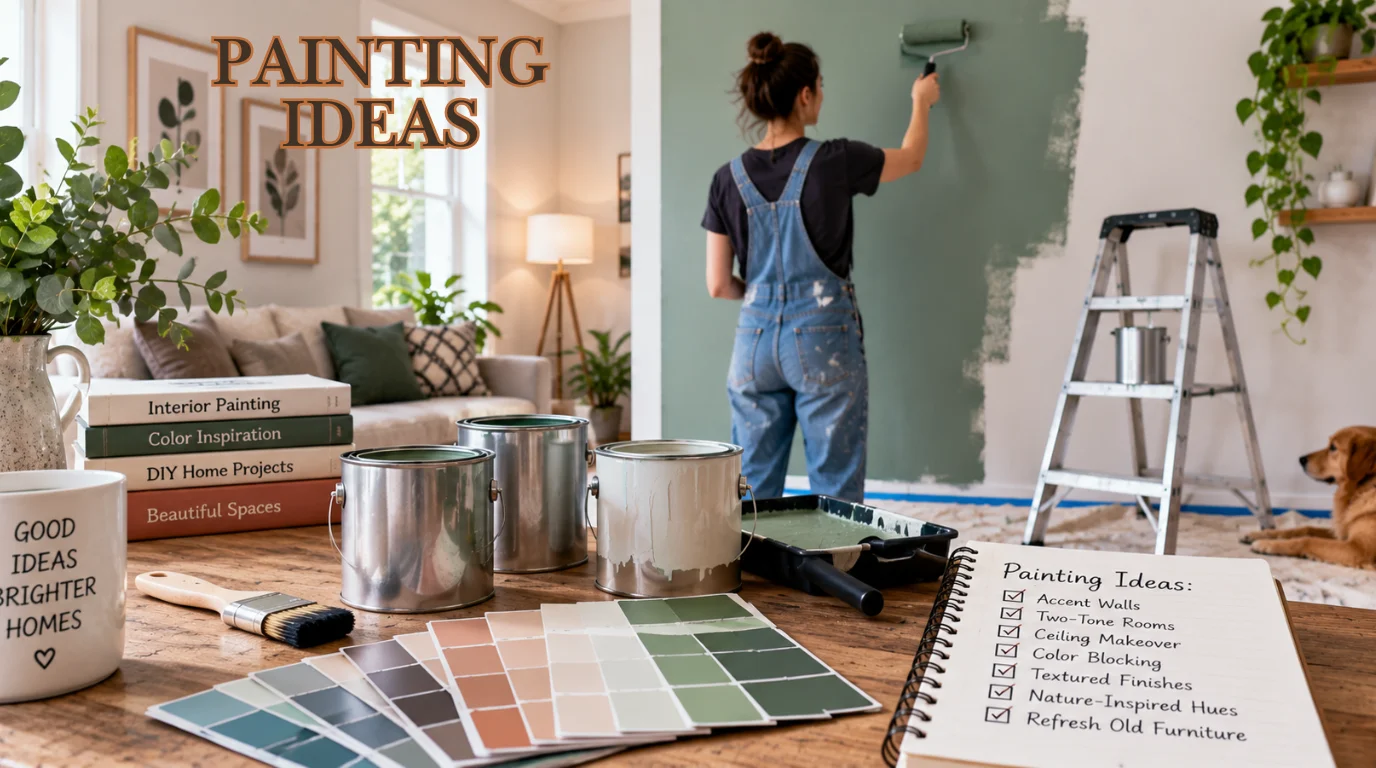
A blank canvas can feel full of possibilities until you have to decide what goes on it. These painting ideas offer beginners practical subjects achievable at home, while still leaving room to experiment with color and personal style. You don’t need advanced drawing skills or an expensive collection of brushes to make something worth displaying.
Quick answer: For a first project, choose a simple subject with large shapes and only three or four colors. Good options include a sunset gradient, a single piece of fruit, a moonlit sky, geometric blocks, or a loose floral. Keep the canvas small, sketch lightly, and aim to finish in one relaxed session.
| What to decide for Painting Ideas | Beginner-friendly choice | Why it helps |
|---|---|---|
| Surface | Small canvas board or thick art paper | Easier to finish without feeling overwhelmed |
| Medium | Acrylic or watercolor | Both work with a modest starter kit. |
| Subject | Simple objects, skies, flowers, or scenery | Fewer small details to control |
| Color palette | Three to five colors | Makes color mixing easier |
| First goal | Finish one small project | Builds confidence through practice |
| Planning | Quick pencil thumbnail | Helps place the main shapes before adding color |
How to Choose an Idea You’ll Enjoy Finishing
Start with a subject you already enjoy looking at, rather than choosing something just because it looks impressive online. A simple project gives you more time to notice color, shape, contrast, and brush control, rather than struggling with tiny details. Topicley’s starter ideas guide follows the same useful principle: begin with a manageable idea and improve it through action.
Think about the result you want as well as the skill you want to practice. Broad skies suit blending, and fruit helps you study light and shadow, while simple flowers are useful for repeated shapes and confident brush marks. If you’re choosing art for a room, you can also start with two or three colors already present in your cushions, curtains, or furniture.
Quick Takeaways
- Choose one clear subject rather than a busy scene.
- Limit yourself to three to five main colors.
- Use a small surface for your first few projects.
- Work from large shapes towards smaller details.
- Keep your first attempt instead of repainting it repeatedly.
- Repeat favorite subjects to see your progress.
What You Need Before You Start
A useful starter kit can stay simple: a surface, paint, two or three brushes, water, a mixing plate, and something to protect the table. Acrylic is useful for bold color and layered work, while watercolor suits softer washes and lighter marks. Current UK craft resources, such as Hobbycraft, also organize beginner projects in acrylic, watercolour, and other media, so you can choose a method that matches the supplies you already own.
Sketching the main shapes first can remove much of the uncertainty from a blank surface. You can use scrap paper for small composition tests before committing to the final version, and Topicley’s guide to creative uses for lined paper includes sketching and brainstorming. Keep the preliminary drawing loose because the purpose is placement, not a finished pencil illustration.
25 Painting Ideas That Are Easy to Personalize
The most useful painting ideas are specific enough to get you moving but open enough to make your own. The projects below use recognizable shapes, manageable color palettes, and subjects that can be simplified whenever needed. Pick one that matches your mood, the materials you have available, and the amount of time you want to spend.
- Sunset gradient: Blend yellow, orange, pink, and deep blue in broad horizontal areas.
- Single apple or pear: Place one piece of fruit under a lamp and study its simple light and shadow.
- Blue sky and clouds: Use a large brush for the sky and soft irregular shapes for the clouds.
- Mountain silhouettes: Build depth with pale distant shapes and darker foreground peaks.
- Simple sea horizon: Divide the surface into sky and water, then add a few light wave marks.
- Moonlit night: Use deep blue, a pale moon, and a few scattered stars for a limited-palette project.
- Three-color abstract: Choose three colors you like and overlap broad shapes without drawing first.
- Geometric blocks: Divide the surface into squares, arches, or circles and fill each shape cleanly.
- Leaf silhouettes: Paint large leaf shapes against a contrasting background using a limited green palette.
- Loose wildflowers: Build flowers from dots, short strokes, and simple stems rather than detailed botanical drawings.
- Meadow at dusk: Combine a blended sky with dark grass and small flower marks along the lower edge.
- Tree-trunk pattern: Repeat vertical trunks and add small branch lines for a calm woodland-inspired design.
- Rainy window: Use grey-blue tones, blurred building outlines, and light vertical marks to suggest rain.
- British coastal cliffs: Simplify a seaside reference photo into sea, cliff, sky, and a few strong shadows.
- Four-season tree: Divide the canvas into four areas and change the leaves to suit spring, summer, autumn, and winter.
- Favourite mug: Use one everyday object to practise ellipses, handles, and simple shading.
- Cosy book corner: Combine a book, a mug, and a small lamp using large, simplified shapes.
- Herb pots: Paint three small pots with different leaf shapes for an easy kitchen-themed piece.
- Checkerboard design: Use two or three colors for a neat retro-inspired pattern.
- Line the face with color blocks: Draw a single continuous facial outline and place flat color behind the selected areas.
- Mini triptych: Create three small related canvases using the same palette and repeated shapes.
- Simple garden birds: Reduce each bird to an oval body, a circle head, and a few identifying color patches.
- Terraced-house shapes: Use rectangles, rooflines, doors, and windows to create a colorful, street-inspired design.
- Textured color study: Apply thick areas of color with an old card or palette knife and allow the surface marks to remain visible.
- Local-view postcard: Use a photograph of a park, beach, village street, or skyline and simplify it into five or six large shapes.
Choose a Painting Medium That Matches the Project
Acrylic works well for projects built from solid shapes, repeated layers, and strong blocks of color. Watercolour suits transparent washes, loose flowers, skies, and projects where the white paper remains part of the design. The Works’ current beginner guidance also uses simple scenery and floral subjects to introduce watercolour techniques without requiring complicated drawing.
You don’t need to choose one medium permanently. Try the same simple subject twice, perhaps a sunset in acrylic and again in watercolour, and notice how the materials change your decisions. Repeating one subject is often more useful than switching to a difficult new composition every session.
Five Ways to Make Simple Artwork Look More Intentional
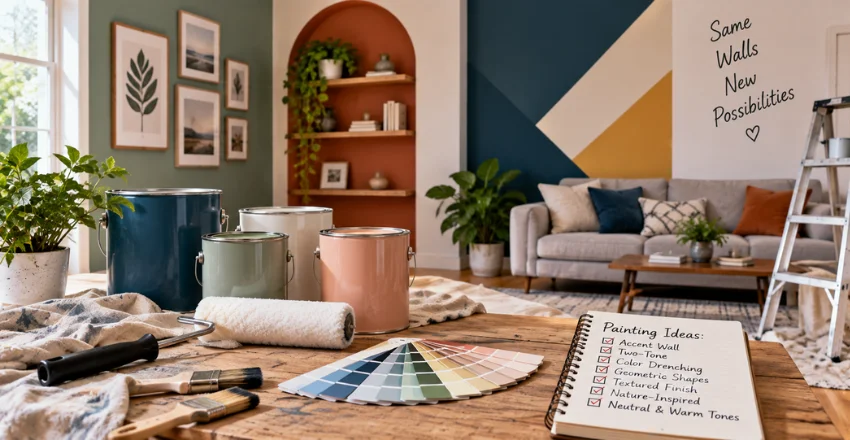
A basic subject can still look considered when the composition and color choices feel connected. Choose one obvious focal point, leave some quieter areas around it, and avoid filling every centimeter with detail. Repeating colors in different parts of the artwork can also tie the whole piece together.
- Limit the palette: Pick a small color family before you begin.
- Repeat shapes: Repeated circles, leaves, or blocks create rhythm.
- Vary the scale: Combine one large element with several smaller ones.
- Check the edges: Decide whether shapes stop before the edge or deliberately continue beyond it.
- Step away regularly: Viewing the work from across the room makes balance problems easier to spot.
Don’t keep correcting every irregular mark. Slight differences in edges, brush pressure, and shape can give handmade work much of its character. Stop when the main idea reads clearly, then revisit it later before deciding whether anything needs changing.
Creating Art for Your Home
If the finished canvas is going on a wall, consider the room before choosing its proportions and colors. A narrow vertical piece may suit a small wall beside a doorway, while a horizontal design often fits naturally over wider furniture. Topicley’s home improvement section can help you consider the artwork as part of a broader room update rather than an isolated decorative object.
Lighting affects how colors and surface texture appear once the work is displayed. Natural daylight is useful for choosing colors while you work, while room lighting changes how the finished piece looks after dark. If you are planning bedroom artwork, Topicley’s bedside wall-lighting guide also explains the difference between ambient, task, and accent lighting.
Pick One Project and Begin
The quickest way to move past a blank canvas is to make the first decision small. Pick one project from the list, choose three or four colors, and give yourself a single session to explore it without chasing perfection. Your second attempt will already be informed by everything you noticed during the first.
Save the subjects that interest you most and return to them as your skills grow. Painting the same mug, tree, coastline, or abstract arrangement several months apart gives you a useful record of how your color choices and brush control have changed. The next idea becomes easier to find once you have started making the first one.
Frequently Asked Questions
What are the easiest painting ideas for a complete beginner?
Simple skies, color gradients, single pieces of fruit, geometric shapes, and basic flowers are useful starting points because they can be reduced to large forms. Choose a small surface and no more than a few colors for your first attempt. Your goal should be to finish the project and learn from it rather than copy a reference perfectly.
Do I need to know how to draw before I start?
No, many beginner projects rely more on shape and color than detailed drawing. You can sketch circles, rectangles, horizon lines, and loose outlines before applying color. Tracing a basic shape or using a reference grid can also help while your observation skills develop.
Is acrylic or watercolor easier for beginners?
The easier choice depends on the result you want and how you prefer to work. Acrylic is suited to opaque blocks and layering, while watercolour rewards lighter applications and gradual washes. Try a small project in each medium before spending money on a large collection of supplies.
What can I paint on a small canvas?
Small canvases suit fruit, flowers, moons, birds, mugs, houses, abstract blocks, and simple coastal views. A limited surface encourages you to remove unnecessary detail and concentrate on the main shapes. Several small pieces can also become a coordinated group if you repeat the same colors across them.
How can I come up with my own subjects?
Start with photographs, objects, and places from your normal routine instead of searching endlessly for elaborate references. Look at a favorite cup, your garden, the view from a window, or photographs from a UK day trip, and ask how the scene could be reduced to five large shapes. Changing the colors, cropping the view, or combining two references will make the final result more personal.